Painting Stairwells and High Walls in Carlsbad Homes
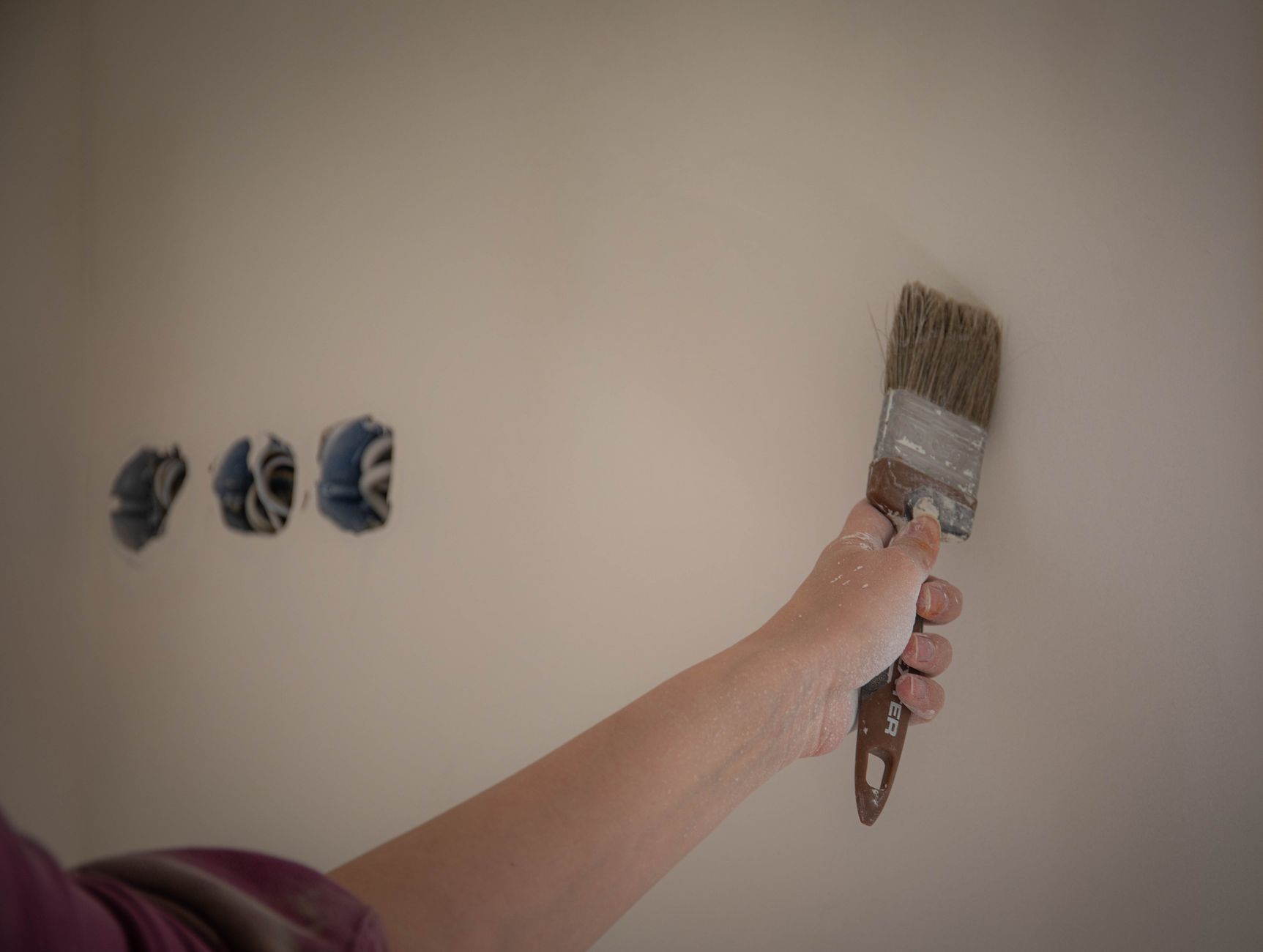
The wall that rises beside a staircase is the tallest flat surface in most houses, and it is the one people put off painting longest. In Carlsbad the problem shows up in two kinds of houses. The first is the two story entry in a newer master planned neighbourhood such as Aviara or Bressi Ranch, where a wall can run well past what a stepladder reaches. The second is the older split level or ranch from the 1960s, where the stair drops down at an angle and the floor under the wall is not level at all.
Why is a stairwell harder than an ordinary wall?
Three things make it harder. The wall is tall, so every coat takes longer to reach. The floor under it changes height with every tread, so a ladder cannot simply stand on it. And the wall is a single sheet of paint seen from both above and below, so a lap mark or a thin patch is visible from the landing as well as from the front door.
Flat floors forgive a ladder. Stairs do not. A painter working a stairwell is solving a footing problem before a paint problem, and the footing decides how the rest of the work goes.
What equipment reaches a high wall safely?
Crews generally pick from a short list, and the choice depends on the shape of the stair and the height of the wall.
| Equipment | Where it suits | Limit |
|---|---|---|
| Extension ladder with a levelling foot | Straight stairs with a clear landing | One person, one position at a time, and no room to step sideways |
| Ladder with a stair stabiliser leg | Open stairs with short walls | Needs a firm tread and a wall that is not too tall |
| Rolling scaffold tower | Wide entries with a flat floor at the bottom | Needs space to assemble and move |
| Staged plank scaffold | Tall walls above a stair run | Takes the longest to set up, and gives the most freedom once up |
| Pole with an extension handle | Upper roller work and long lap runs | Gives reach but poor control at corners and edges |
For a tall wall above a stair run, a plank platform supported on ladder jacks or a stepped scaffold is the common answer. The platform sits level while the stair underneath does not. That one change lets the painter keep a wet edge across the whole width of the wall, which a single ladder cannot do.
Where does the work start?
At the top. Ceilings and the highest part of the walls come first because paint spatter falls, and anything below that is already finished will pick it up. The painter works down the wall in bands and finishes the lower section last, with the platform brought down a stage at a time.
Before any paint, the surface gets cleaned. Stair walls collect hand marks along the rail line, scuffs from furniture and bags, and a layer of dust on the upper sections that nobody has wiped in years. A damp cloth or a mild cleaner clears all of it. Any hairline cracks, nail holes and dents get spackle, then sanding with a pole sander on the high sections, then a spot of primer so the patches do not flash through the topcoat.
How do crews avoid lap marks on a tall wall?
A lap mark is a visible stripe where fresh paint rolled over paint that had already started to dry. It shows most on a flat finish and on dark colours, and a tall wall invites it because each pass takes longer.
The fixes are mechanical:
- Cut in the edges along ceiling, corners and trim only a short section ahead of the roller, so the brushed edge is still wet when the roller reaches it.
- Roll in a vertical strip the full height of the working section, then overlap it before the first strip dries.
- Use a roller with a nap suited to the texture, so each load of paint carries across a good length of wall.
- Keep the platform at a height where the roller arm is not stretched, because a stretched arm presses unevenly and leaves a thin, streaked film.
- Finish each full wall in one session. A stair wall that is painted halfway one day and finished the next will show the join.
Temperature plays a part. Carlsbad mornings are often mild and damp near the coast, and a latex or acrylic coat stays workable longer in those conditions than it does in the dry heat of a warm afternoon. Crews working a tall wall often plan the roller passes for the cooler part of the day for exactly this reason.
What finish belongs on a stair wall?
Stair walls take more contact than almost any other wall in the house. People brush the handrail side with shoulders, bags and hands, so the finish needs to take a wipe without burnishing. Eggshell is the common choice, because it cleans better than flat and hides surface flaws better than satin. In a house with children or dogs, a satin along the lower section earns its extra sheen. A flat sheen is better kept for the ceiling over the stairwell, where nobody touches it and the flaws should stay hidden.
The handrail, balusters and the stringer trim are a separate job. Those parts get a harder enamel, sanded lightly so the finish bonds, and they are done after the wall so any drips from the wall work are cleaned away first.
Does a stairwell near a bathroom or kitchen need anything different?
It can. In houses where the stairwell opens straight into a kitchen or runs beside a bathroom, steam and cooking vapour travel up the stair like a chimney. The upper part of the wall can carry more film and more moisture than the lower part, and the ceiling at the top is often the first place mildew shows up. A quick wash of the upper wall and ceiling before painting, and a stain blocking primer over any marks, protects the new coat.
Older cottages and bungalows near Olde Carlsbad often have a narrow stair with a small window at the top. That window lets in the winter damp and the summer fog, and the wall under it may show a faint tide line. Any marks like that are sealed with primer before topcoat, or they come back through the finish.
How is the stair protected while the work is going on?
A painter treats the stair as a work surface and a household route at the same time. Treads are covered with rosin paper or a fitted runner that does not slide, with canvas drop cloths along the edges where paint is most likely to land. Plastic on a stair is slippery, so it is avoided on the treads and used only on the rails and furniture nearby.
The handrail gets wrapped with masking tape or a soft cover. Light fixtures, switch plates and vents are removed or covered, and the floor at the bottom is protected beyond the obvious drop zone, since roller spray travels farther than most people expect.
What is the order for a whole stairwell?
- Move furniture and cover the floor, treads and handrail.
- Wash the wall and ceiling, and let them dry.
- Patch, sand and spot prime the repairs.
- Caulk the gaps along trim and corners with a paintable caulk.
- Cut in and roll the ceiling at the top of the well.
- Cut in and roll the walls from the top band downward.
- Paint the stringer trim, balusters and handrail once the walls are dry.
- Remove the covers, clean up and look over the finish with a light held low along the wall.
The low light check matters on tall walls. A flashlight held flat to the surface throws a shadow across every thin patch and lap line, and those are easy to fix while the equipment is still in place. Once the platform is gone, a missed section means setting it all up again.
Which part of the house gets painted after the stairwell?
The wet rooms and the bedrooms follow. Doing the stairwell first keeps the tall work, the dust and the heavy equipment away from rooms that are already finished. It also means any drips or spatter that fall on the floor below land on a surface that is about to be covered anyway.
A stairwell painted well looks plain, and a stairwell painted badly looks like a mistake from every angle in the house. Setting up for the height, keeping a wet edge and finishing each wall in one session does most of the work.